

Their name: Cynthia Fernández
Their position in the company: Manager
The city in which they’re based: Madrid, Spain
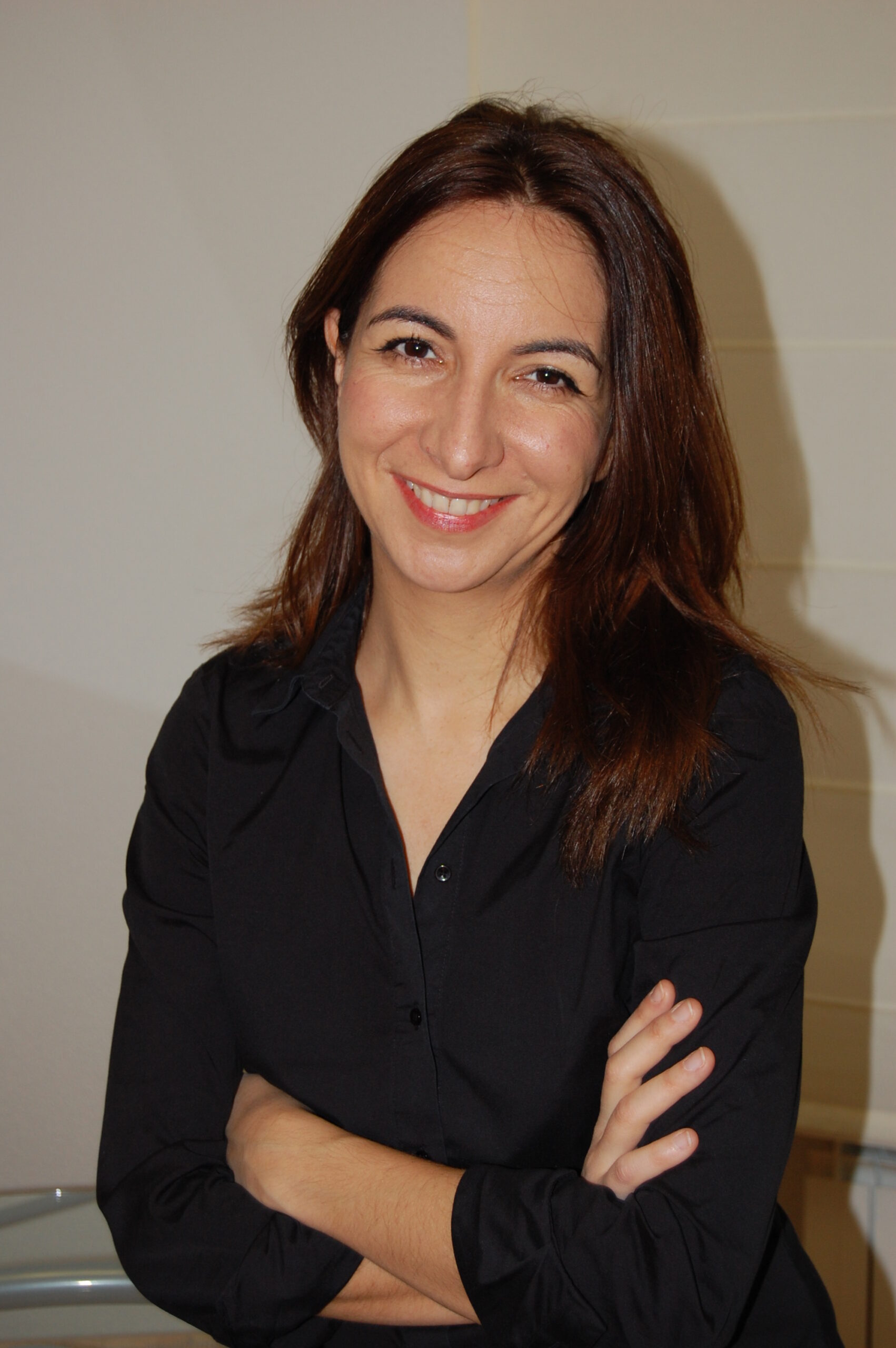
From a very young age, I was in close contact with the automotive world. My father and my aunt both worked at Valeo—he as a product manager and she as head of communications—so it was completely normal for family conversations at home to revolve around brakes, headlights, manufacturing processes or business trips. But, above all, they talked about the people who brought the sector to life at that time. I grew up hearing the names of executives and aftermarket professionals who, years later, I eventually met in person. To me, they were figures that felt almost familiar long before I started working in this field.
That environment sparked my curiosity for both the automotive industry and for the way narratives, relationships and the public image of such a technical—yet deeply human—sector are built. So when the opportunity came to steer my career toward automotive communications, the transition felt completely natural.
There’s no such thing as a “typical day” in communications. Projects are highly diverse, platforms have multiplied, and the pace has dramatically increased. Added to this is the demand for immediacy from today’s audiences, who expect to receive clear, verified and engaging information almost instantly. So my day can shift in a matter of seconds: breaking news that must be evaluated, translated and distributed without delay; a negative reaction on social media requiring a measured response; an unexpected crisis that forces a full reorganization of priorities. These are common situations that can make anyone’s
pulse rise.
Fortunately, not everything is urgent. There are also quieter moments when I can stop, think, create and shape deeper strategies. Even though we work in times of “high-speed information,” the real challenge is maintaining quality, coherence and long-term vision. That blend of dynamism and reflection is, for me, one of the most stimulating parts of the job.
Without a doubt, I couldn’t do my job without my team—especially without my partner at FA Comunicación – APR Spain and, at the same time, my husband, Alejandro Galindo. It’s amusing to see how most people react the same way when we mention that we work together: almost everyone says they “could never do that.” Yet for us, it has been one of the best decisions of our professional and personal lives. We’re lucky to complement each other naturally: where one excels, the other reinforces, and that combination allows us to achieve results that would be far more difficult individually.
Alongside us is an extraordinary team, with different profiles that provide perspectives, ideas and skills that enrich every project. The agency is, actually, the sum of all of them: their talent, judgment, commitment, and the trust we’ve built over the years. This collaborative philosophy was also the seed of Automotive PR. Even though the internet already allowed access to information from other markets, we
understood that, to offer a truly effective service to clients that wanted to communicate beyond their borders, it was essential to rely on local experts in each country. That’s how the idea was born: combining the best of us locally, providing in-depth knowledge of the landscape and a network of specialists able to contribute context, cultural insight and first-hand experience of each market.
Of course, it would also be impossible to work without the tools we have today. Artificial intelligence—admired and questioned in equal measure—has become a key ally. It lets us analyse, explore and propose innovative solutions for our clients, expanding horizons that once seemed out of reach. Still, I insist: nothing replaces the human factor. Good decisions don’t come solely from speed or technology, but from the moments of reflexion, the professional judgement and the sensitivity of a cohesive, complementary team. That’s where the real value of our work is built.
Today, the local media landscape is more diverse than ever—and also more fragmented. Traditional media outlets with long-established presence coexist with highly agile digital projects that have successfully adapted to new audiences. Although a few groups still maintain significant influence, the weight of digital platforms and specialised media has grown enormously. This creates a dynamic ecosystem, more competitive and, often, more inmediate, where the ability to deliver reliable, high-quality information is what really makes the difference.
In the automotive world—particularly in the aftermarket—this diversity is even more visible. Specialised media, that already had significant relevance, continue to be a key reference for industry professionals thanks to their technical analysis, trend coverage and highly targeted content. At the same time, digitalisation has enabled new channels that bring information directly and consistently to
workshops, distributors and manufacturers. Even influencers have emerged, with large communities built around highly specific topics such as daily life in a car workshop, showing how much the sector’s communication has diversified and opened up to new formats and narratives.
One practice I apply consistently—and that I believe any communication professional could benefit from—is maintaining a very close relationship not only with the media, but with all actors in the sector. The automotive ecosystem, especially the aftermarket, is extremely interconnected: manufacturers, distributors, workshops, associations, tech providers, startups… You never know what collaborations, mergers or projects may emerge tomorrow.
That’s why cultivating a solid, honest and well-maintained network is essential. Public relations, in its broadest sense, remains a key tool in a sector that, despite being very technical, is deeply driven by trust and personal connections.
My first piece of advice is to start building a strong network of contacts from day one. In this sector, relationships matter as much as content, because sometimes an unexpected connection opens doors later on.
The second is to listen: to the media so you understand what they need, to clients so you can anticipate their challenges, and to the market to spot trends. The ability to observe and adapt is fundamental in such a fast-changing environment.
And finally, always stay curious: try new tools, explore digital formats and stay informed about how the sector is evolving. It’s good advice no matter where you work or what your role is, because curiosity is one of the qualities that drives professional growth in any field.
Rather than speaking about my own personal success, I prefer to extend the credit to the agency. And I believe part of that journey began even before I joined it. Starting my career alongside my aunt—founder of the agency and a highly respected professional in Spain’s automotive aftermarket communications—was a genuine privilege. I’m very aware of how much I learned from her and deeply grateful for it.
As for the agency’s success, consistency, closeness to the client and the ability to adapt to a constantly evolving sector have been essential. In my view, the mutual trust within the team and the value we place on human relationships have made everything else possible.
Professionally, I follow the most relevant general-interest media outlets in Spain and, of course, all automotive-specialised publications. I don’t rely solely on social media; I’m also subscribed to their newsletters, which give me a daily “flash” of what’s happening in the sector—something crucial for anticipating, commenting on or reacting quickly to the news.
We’ve all heard the phrase “Spain is different,” but in reality every country is different in its own way. I think something that often surprises visitors is that we are a highly technological country—we have a cutting-edge industry, a highly advanced automotive sector and enormous innovation capacity—yet at the same time we remain deeply human in how we relate to one another. Despite the convenience of virtual meetings, we still need face-to-face contact, physical gatherings and those interpersonal spaces where trust is built.
This is very evident in communications and in the automotive sector. Here, personal relationships still carry tremendous weight: trade fairs, conferences, workshop visits or meetings with manufacturers are seen as key moments, not only for exchanging information but also for strengthening bonds. So even though we work with advanced digital tools and live in an increasingly globalized environment, in-person conversation remains, for many, a fundamental part of how we do business and build professional networks. Perhaps that balance between modernity and warmth is one of the most distinctive—and most valuable—traits of how we work.